
I designed this website for a book "Noone Ever Drowned in Sweat" using Bootstrap, and also a personality profile (AMP) using PHP. Take the assessment today, and get your Action Mindset Profile (AMP) FREE!
Here, I created an Intranet using tile webparts, custom CSS, banners, and iconography.
I designed an Intranet for Sodastream incorporating action images, custom branding, and appropriate coloring.
ValidaTek is invested in implementing the latest technologies and methodologies to help customers achieve their mission. I used the HTML canvas to draw graphics and create immersive experiences on the website.
In PowerApps I redesigned a form made in Infopath with validation and redordering based on importance.
Redesigned the Dashboards for internal .NET components incorporating new themes and ideas.
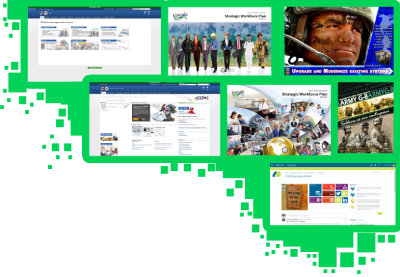
Designed this picture as a promotional piece displayed throughout the courthouse, letting it be known of the new Uscourts intranet redesign using drupal.
MD Tech Solutions needed an upgrade to their main website. I designed the branding and overall look and feel of this site.
I gave MD Staffing a look and feel that stood out from other staffing companies including but not limited to the color, logo, and functionality.
This was a commerical trucking company that wanted an upgrade to the look of their site. I redesigned this site using HTML5, CSS3, and Javascript.
CAE is focused on educating those in need. I created a site with that sensitivity.
This website incorportes HTML5 structure and Javascript navigation with a new color layout and rebranding to showcase the Soldiers and their stories.
This redesign used flat icons, Google Maps, relative links, and a Live Excel Chart to SharePoint with the Excel Web Access Web Part!
This page redesign was made with the idea of flattening the design with fewer clicks.
I took a microsoft word attachment to an email and made a fully functioning webpage using Bootstrap. The FAQ page had tabs, alerts, recognizable iconography, and collapsable/expandable questions to minimize browser space.
This design took a popular theme used for some of the WWHR conventions, Art Nouveau, and made a website that reflected that look and feel.
I branded and design this CMS using Bootstrap and Photoshop in Sharepint 2013.
This CMS system offers a way to go paperless with documentation.